
This guide is general information, not legal advice. Rental law differs across England, Scotland, Wales and Northern Ireland, so check the rules where you live. Last reviewed 14 August 2026.
Cat-friendly renting is about more than getting permission. The layout of the home, windows, outdoor access and communal rules can make a huge difference to whether the property actually works.
Indoor or outdoor cat?
Be clear about your cat’s routine before you search. An indoor cat may suit a higher-floor flat perfectly, while a cat used to outside access may struggle in a property with no safe route outdoors.
Check windows and balconies
Look at how windows open, whether there are restrictors and whether a balcony can be made safe without breaching the tenancy or building rules. Never assume a high balcony is automatically safe because a cat is agile.
Think about scratching and flooring
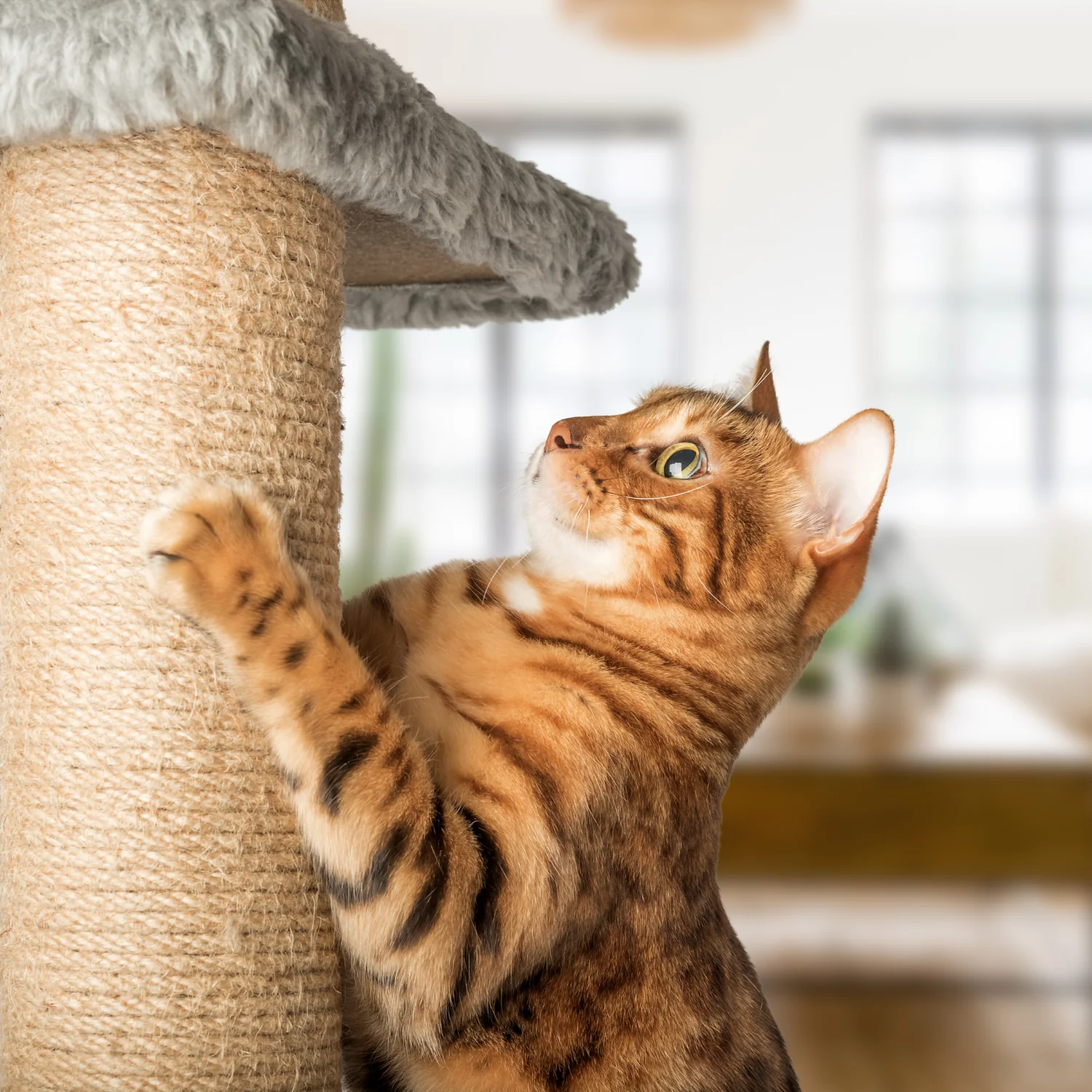
Carpet, stair coverings and furnished homes can create extra wear concerns. A scratching post and sensible protective measures can reassure a landlord and make the home easier to live in.
Ask about more than one cat
A listing that welcomes cats may still limit the number of pets. If you have two or more cats, ask before arranging a viewing.
Consider the litter-tray setup
Is there somewhere ventilated and easy to clean that does not block a hallway or food-preparation area? Small studios can work well for some cats, but the practical layout matters.
Check communal entrances
Busy shared hallways and doors that are frequently left open can be stressful or unsafe for some cats. If your cat is nervous, look at the route from the flat to the outside world.
Keep the pet information concise
A landlord may want to know whether the cat is indoor-only, how long you have had them, whether they have rented before and whether there were any issues. A simple Pet CV is enough.
Ask what “cats welcome” actually means
Before you sign, make sure permission is written clearly and check whether any freeholder, building or management-company rules apply. The tenancy and the building rules need to work together.
You can search cat-friendly rentals on Paw Keys and set an alert if there is nothing suitable today.
Will the cat be allowed outside?
Do not assume permission to keep a cat automatically includes permission to add a cat flap or alter a door. If outside access is essential, ask what changes are permitted before you apply. In some flats, the building layout may make direct outdoor access impossible even if the landlord is happy with cats.
What if you have more than one cat?
State the number clearly. Two bonded cats can be easier to manage than one highly active cat, but the landlord needs accurate information. Also think about whether the property has enough separate resting, feeding and litter areas to keep multiple cats comfortable.
Furnished versus unfurnished
A furnished rental may mean more items that can be scratched or climbed on. If your cat is used to scratching posts and furniture protection, say so. In an unfurnished property, check the flooring and window coverings because those can still be vulnerable.
Moving day matters
Cats can find moving stressful. Before the move, identify one secure room where your cat can settle while doors are open and boxes are being carried in. Update microchip details where relevant and make sure the tenancy start gives you enough time to move safely rather than rushing the pet into a chaotic environment.
Make the written permission specific
If you have two cats, the written agreement should not simply say “a pet”. Clear permission protects both sides from later confusion about what was actually agreed.